

raramuridesign support
Biodiversity & Wine Initiative
The Initiative
The Biodiversity & Wine Initiative is a partnership between the South African wine industry and the conservation sector. The goals are to minimise the further loss of threatened natural habitat, and to contribute to sustainable wine production, through the adoption of biodiversity guidelines by the South African wine industry.
This is achieved through identifying and enlisting interested producers as members or champions of the initiative, who will implement the biodiversity guidelines, conserve critical ecosystems and incorporate a biodiversity management into their winery activities.
Why and How?
The Cape Floral Kingdom (CFK) is the smallest yet richest plant kingdom on earth, and is international recognition as a global biodiversity hotspot. The CFK is also one of South Africa's World Heritage Sites. However, the CFK is under increasing threat from agriculture, urban development and invasive alien species, with only 9% of the unique Renosterveld and Lowland Fynbos ecosystems remaining, and much of the Succulent Karoo also under threat. Since 80% of the CFK is privately owned, landowner participation in conservation efforts is essential. The most effective method of reaching landowners is through the agricultural industries that they supply.
South Africa is the world's eighth largest producer of wine, contributing 3.5% of the global wine production. Because approximately 90% of wine production occurs within the CFK, concern is mounting that some of the region's most vulnerable natural habitat might be targeted for vineyard expansion. Following an initial study by the Botanical Society of South Africa and Conservation International, the wine industry and the conservation sector have embarked on a pioneering partnership to conserve the rich biodiversity of the CFK.
Through the BWI both the wine and conservation sectors benefit.
Wineries and wine farms can register and become a member of the BWI by contributing at least 2 ha of natural or restored natural area. As members earned additional recognition and status for their excellent track record of environmental responsibility they could become a BWI Champion. Three of the Cederberg Conservancy members are also members of the BWI, namely Cederberg Wines, Nuwerust and Vogelfontein, with the latter two making the largest contribution of natural environment to the BWI project.
For more information on BWI go to: WWF Conservation and Wine
Wine Tasting
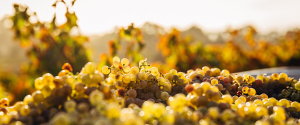
Cederberg Private Cellar
At an altitude of more than 1 000m above sea level, Cederberg Private Cellar is South Africa’s highest winery and offers an experience treasured by every visitor to the farm...

Blessed with a cool, continental climate, diverse soil types, unpolluted air and crystal clear waters, winemaker, David Nieuwoudt sculpts red and white wines as dramatic as the high-altitude setting of this highly acclaimed, award-winning winery.
Boasting numerous local and international accolades, it is a dedication to excellence, attention to detail, and respect and love for the rugged terrain that makes Cederberg Private Cellar one of South Africa’s leading wine producers.
TASTINGS
- Monday to Saturday 9:00 to 16:30
- Closed on Sundays, Good Friday & Christmas Day
For more information contact
Tel: +27 (0)27 482 2827
E-mail: This email address is being protected from spambots. You need JavaScript enabled to view it.
Website: www.cederbergwine.com
Driehoek Wines
Vineyards were planted on Driehoek for the first time in 2006 ..., or that was what we thought. To our big surprise, we recently stumbled on a census report for Driehoek in the Cape Town Archives for 1814, stating that there were then 10 000 vines as well as barrels of wine and brandy! One can only speculate why those early pioneers did not continue with wine farming.


Well, after an absence of about 200 years wine is back on Driehoek, and with quite a ‘bang‘! With the assistance of neighbour and winemaker David Nieuwoudt from Cederberg Cellars the Driehoek wines have won some top local and international awards. At the top of this list is the Driehoek 2014 Shiraz which was declared the competition winner in the international Syrah du Monde Competition in 2017 in France. Driehoek also produces a Pinot Noir, Sauvignon Blanc and Rose.
The Driehoek wines can be bought on Driehoek. Unfortunately, no tastings are provided on the farm.
Kromriver Wine Sales
In the very heart of the Cederberg, Kromrivier Vineyards has accepted a challenge of adventure and discovery by matching untested terroir and making wine.

Cultivars planted: Shiraz, Chardonnay, Pinot noir, Tempranillo, grenache noir
Look-out for our KromrivierShiraz, Chardonnay, Pinot noir and Blanc de noir MCC.
Swimming
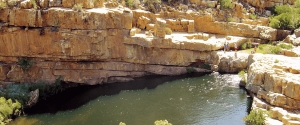
The rivers and streams in the Cederberg offer refreshing opportunities for swimming and recreation.
Plunge into a rock pool on a hot summer’s day or after a long hike in the mountains. Relax next to a river or swimming pool at the campsites. Enjoy the pure, clear water in unspoilt surroundings.
As a precaution, make sure that you familiarise yourself with a rock pool before you dive in to prevent unnecessary injuries such as accidentally hitting a rock underwater.
During holidays and long weekends, most establishments do not accommodate day visitors. Outside of these times, most facilities require access via a permit.
Please check-in at the establishment’s office before making use of swimming areas on their property.
Star Gazing

The Cederberg Observatory is located 2km from Dwarsrivier. The observatory offers you the opportunity to learn about the Milky Way and galaxies of which our planet earth, is a part of.
They offer slide shows and opportunities to look at the stars through telescopes. The two hour show starts at 20h00 every Saturday evening weather permitting, except the Saturday closest to the full moon.
Donations are welcome after the show.
Visit www.cederbergobservatory.org.za for more details.
Rock Climbing
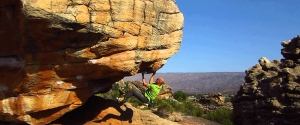
Rock climbing is a sport in which participants climb up or across natural rock formations with the aim to reach the summit of a formation or the endpoint of a pre-defined route. There are various forms of rock climbing but only three are practiced in the Cederberg Conservancy namely Sport climbing, Traditional climbing and Bouldering.
Traditional Climbing
Traditional or Trad Climbing involves rock climbing routes that do not have permanent anchors placed to protect climbers from falls while ascending. Gear is used to protect against falls but not to aid the ascent directly.
Sport Climbing
Unlike Traditional Rock Climbing, Sport Climbing involves the use of protection or permanent anchors which are attached to the rock walls.
Bouldering
Climbing on short, low routes without the use of the safety rope that is typical of most other styles. Protection, if used at all, typically consists of a cushioned bouldering pad below the route and/or a spotter, a person that watches from below and directs the fall of the climber away from hazardous areas.
-
Climbers must please respect the environment and adhere to ‘minimal impact’ and ‘leave no trace’ practices.
-
Please obtain permits and adhere to the rules and regulations as set by the landowners.
Overnight Hikes
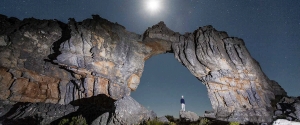
Overnight hikes must be thoroughly planned. Be sure to pack enough rations and all the necessary equipment. Check the weather forecasts before embarking on an overnight hike in the Cederberg mountains.
The available huts on trails serve as shelters only and do not have beds. Hikers can sleep under the stars or in caves or carry a tent.
Hiking maps can be bought at the CapeNature office at Algeria or get Slingsby’s Cederberg 7.1 map at major Camping and Outdoor outlets in Cape Town.
All overnight hiking permits must be obtained from CapeNature (bookings office in Cape Town or the Algeria office)
Tel: +27 (0)87 087 8250.
- Hiking Maps are available from Slingsby Maps
These are some overnight trail sections with the distance of that section
- Pahuis Pass - Heuningvlei = 13km
- Kleinkliphuis - Krakadouw Pass = 11km
- Dwarsrivier (Clanwilliam) - Heuningvlei = 12km
- Heuningvlei - Krakadouw Peak = 4km
- Heuningvlei - Boontjieskloof hut = 12km
- Boontjieskloof hut - Crystal Pool = 14km
- Crystal Pool - Sleeppad = 8km
- Crystal Pool - Algeria = 15km
- Rooiberg - Kruisrivier - Algeria = 19km
- Rooiberg - Kruisrivier - Syferfontein - Bakleikraal - Kromrivier = 29km
Mountain Biking
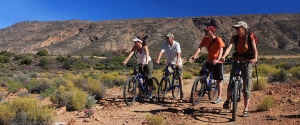
All the public roads in the area can be used for mountain biking.
There are five official mountain bike routes in the area which all cost the day visitor fee per person
Horse-Riding
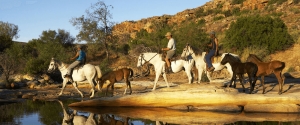
Horse-Riding opportunities exist at Kromrivier and at Driehoek.
Go horseback riding whilst enjoying the scenery; with a chance to see good bird-life and some of the elusive wildlife found in these mountains.
It is important to remember that rides must be pre-booked and that there is a maximum weight of 100kg. No children under 10 years old unless experienced riders. Children must be able to control their horses themselves.
Filming Locations
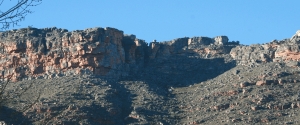
The Cederberg Conservancy offers film producers a variety of breathtaking landscapes that include mountains, rock formations, caves, waterfalls, rivers, farm dams and roads. The amazing light conditions combined with good weather set the scene for film, video and still productions.
Filming Locations are available at
- Cederberg Oasis
- Bakkrans is a unique filming location in the Karoo part of the Cederberg.
- Driehoek Tourist Farm
- Kromrivier
- Mount Ceder
- Nuwerust Rest Camp
- Sanddrif
For Filming Locations on CapeNature Reserves visit: www.permitz.co.za
Accommodation and catering is available in the area.
Day Hikes
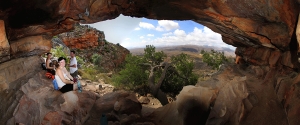
Day hikes in the area vary from 1 – 8 hours.
These hikes are moderate and your personal level of fitness should guide you in deciding which route to follow.
The seasons in the Cederberg are harsh.
Always carry enough water, warm clothes and snacks when embarking on any hike. Travel in groups of at least two. Groups are limited to a maximum of 12. Groups must not split up as this could result in group members getting lost and having to spend an unplanned night in the mountains.
- Duration of trails indicated as a return trip.
- Unless otherwise stated, permits are obtained at the facility listed.
- Day fees are charged for all day hikes
- Hiking Maps are available from Slingsby Maps
Accommodation
Cederberg Backpackers Oasis
Backpacker and Biker accommodation where you can eat, drink and sleep. Information on the area we share with hand drawn maps.

Cederberg Park Kromrivier
Kromrivier, situated in the central Cederberg offers self-catering accommodation or DB&B; luxury campsites with individual ablution facilities and power points.
Activities

Conservation projects

SOB Data Collections
CapeNature launched its State of Biodiversity Programme to assess and monitor the state of biodiversity in the Western Cape in 1999.

Waste Management Strategy
The Cederberg Conservancy does not have the benefit of municipal waste removal services.

Biodiversity & Wine Initiative
The Biodiversity & Wine Initiative is a partnership between the South African wine industry and the conservation sector.

Cape Leopard Trust
The Cape Leopard Trust (CLT) was established with the primary objective to facilitate and promote research and conservation of the Cape’s predator diversity.
About Cederberg Conservancy
-
The Cederberg Conservancy was constituted in 1997 as a voluntary agreement between landowners to manage the environment in a sustainable manner. It consolidates 22 properties in the central Cederberg as one of the core corridors of the Greater Cederberg Biodiversity Corridor and it is active through quarterly meetings and awareness days.
Visitors to the area can engage in bird watching or easy hikes to the Stadsaal cave and Elephant rock art. For the more adventurous visitor the Conservancy offers Mountain bike trails or overnight hiking trials that vary from one to five nights, depending on your level of fitness and ability.