

raramuridesign support
General Rules
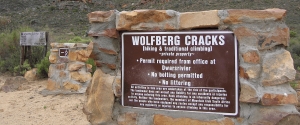
For the benefit of other visitors and preserving the Cederberg, please adhere to the following general rules
- Do not touch or damage rock art as this causes deterioration of the paintings.
- Do not damage or deface rock surfaces, or use rock-bolts when climbing.
- Do not interfere with plants or wildlife.
- Do not litter (including toilet paper) - please take all litter home with you.
- Never discard cigarette butts as they can cause veld fires and are unsightly.
- No open fires are permitted except at designated areas.
- Do not use soap or detergents in or near rivers and mountain streams.
- Pets, including dogs, are not allowed.
- Most properties do not allow Quad-bikes. Please confirm when making a reservation.
- Access to outdoor recreational activities and attractions is subject to permits obtainable at various establishments.
- When hiking keep to the path and walk in single file to prevent damage to the vegetation.
- All fossils and Rock Art are protected as National Monuments and may not be damaged, disturbed or removed.
-
No drones permitted unless arranged with the particular landowner.
The Cederberg is a leisure playground for hundreds of hikers, rock climbers, cyclists and holiday makers and home to hundreds of farm labourers, their families and farm pensioners. Many researchers roam the mountains studying the sensitive habitat of flora and fauna. People and animals use the roads day and night and are often not visible if a vehicle comes hurtling around a bend at high speed.
We regard 60kph as our speed limit, so we kindly ask you to stick to this limit out of respect for this beautiful environment and its inhabitants.
Emergency Numbers
The Cederberg Conservancy does not have cell phone coverage except for the valley at Algeria. Pay-phones are available at tourism facilities. Sporadic reception is sometimes possible on some of the higher mountain peaks in the Cederberg Wilderness.
These are important numbers for emergencies
Rescue
Mountain Rescue - 021 937 0300
Metro Rescue - 021 937 0300
West Coast Control - 022 433 8700
Ambulance
Clanwilliam - 027 482 2576 or 10177
Private Hospital (Ceres) - 023 316 1304
Police
Clanwilliam - 027 482 8181 or 10111
Prince Alfred’s Hamlet - 023 313 3133
CapeNature
027 482 2403 or 027 482 9922
Poison Info Centres
Poisons Information Helpline 0861 555 777
Red Cross War Memorial Children’s Hospital Poisons Information Centre: 021 6585308
Tygerberg Poisons Information Centre: 021 9389596
Climate
Rainfall in the Cederberg ranges from an average of 800mm per annum at Algeria to an average of less than 250mm/annum around Matjiesrivier, Cederberg Oasis, Nuwerust and Mount Ceder. The west of the Conservancy is mostly wet and cold during the winter while the eastern area is very cold with less rain. The most rain falls during winter between May and September. It often snows on the higher parts. Summers are very hot and dry and can reach temperatures as high as 40°Celcius.
Lightning is the most common cause of periodic veld fires. South-easterly winds predominate in the summer while North-westerly winds indicate the possibility of rain during winter.
Ask your host facility for weather details during the period of your visit.
History
The Cederberg derived its name from the endemic cedar tree, Widdringtonia cedarbergensis.
San and Khoi people inhabited the Cederberg area from early times, leaving behind a rich legacy of rock art. European settlers began stock farming in the Cederberg in the eighteenth century.
During 1876 a forester was appointed to oversee Crown Land in the mountains. This was possibly the first attempt at conservation in the Ceder-berg. Nevertheless, uncontrolled exploitation of the Cederberg's natural resources took place from 1903 to 1973. Large amounts of dead cedar wood, rooibos tea, buchu and Rockwood bark was harvested while farmers used the mountains to graze livestock in times of drought. Large numbers of cedar trees were felled as the wood was in great demand for construction - some 7 200 trees were used as telephone poles between Piketberg and Calvinia. Fires added to this destruction and the cedar tree is now on the brink of extinction.
In 1967 the removal of dead cedar trees was halted, and all other exploitation ended in 1973 with the proclamation of Cederberg Wilderness.
In 2004 the Cederberg Wilderness received World Heritage Site status as part of the Cape Floristic Region.
In October 1997 the Cederberg Conservancy was constituted as a voluntary agreement between landowners to manage the environment in a sustainable manner. Conservation goals are achieved through cooperation and dedication towards the conservation of nature on private land. The Conservancy is active through quarterly meetings and participation in conservation projects in the area.
Location
The Cederberg lies some 250km north of Cape Town. This vast region, encompasses some 182 000 hectare of rugged, mountainous terrain, stretching from the Pakhuis Pass in the north to Grootrivier in the south.
The Cederberg may be accessed from the N7 at Kriedouwkrans approximately 28 km from either Citrusdal or Clanwilliam. Alternative gravel roads exist from Clanwilliam and Citrusdal when the Olifants River is in flood. The Cederberg can also be accessed from Ceres via the Koue Bokkeveld via a good gravel road. The road that runs through the Cederberg Conservancy is a public road and there is no charge to travel on this road. Permits are required to gain access to specific sites and hiking trails.
During winter the local tourism offices or accommodation facilities can be contacted to enquire about the conditions of roads and rivers before departing for the Cederberg.
Download Attachment
About
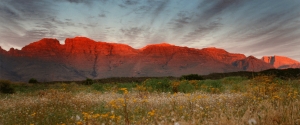
The Cederberg Conservancy was constituted in 1997 as a voluntary agreement between landowners to manage the environment in a sustainable manner. It consolidates 22 properties in the central Cederberg as one of the core corridors of the Greater Cederberg Biodiversity Corridor and it is active through quarterly meetings and awareness days.
Visitors to the area can engage in bird watching or easy hikes to the Stadsaal cave and Elephant rock art. For the more adventurous visitor the Conservancy offers Mountain bike trails or overnight hiking trials that vary from one to five nights, depending on your level of fitness and ability.
The Conservancy is the proud custodian of the Clanwilliam Cedar tree (Widdringtonia cedarbergensis) and offers refuge to the rare Cape Leopard.
The isolated and relatively under-developed area of about 182 000 hectares is safe to visit and offers visitors a variety of activities and accommodation ranging from basic camping to fully catered luxury facilities, with the associated range in prices. Accommodation is available at the sites listed below in alphabetical order. Please refer to the map of the Cederberg Conservancy for locations and contact the particular establishment for further information or to make a booking.
Accommodation
Nuwerust Rest Camp
An unforgettable experience for outdoor and nature lovers! Nuwerust Rest Camp is situated in the Breekkrans river valley, surrounded by majestic southern Cederberg mountains.
Mount Ceder
Activities

Conservation projects

SOB Data Collections
CapeNature launched its State of Biodiversity Programme to assess and monitor the state of biodiversity in the Western Cape in 1999.

Waste Management Strategy
The Cederberg Conservancy does not have the benefit of municipal waste removal services.

Biodiversity & Wine Initiative
The Biodiversity & Wine Initiative is a partnership between the South African wine industry and the conservation sector.

Cape Leopard Trust
The Cape Leopard Trust (CLT) was established with the primary objective to facilitate and promote research and conservation of the Cape’s predator diversity.
About Cederberg Conservancy
-
The Cederberg Conservancy was constituted in 1997 as a voluntary agreement between landowners to manage the environment in a sustainable manner. It consolidates 22 properties in the central Cederberg as one of the core corridors of the Greater Cederberg Biodiversity Corridor and it is active through quarterly meetings and awareness days.
Visitors to the area can engage in bird watching or easy hikes to the Stadsaal cave and Elephant rock art. For the more adventurous visitor the Conservancy offers Mountain bike trails or overnight hiking trials that vary from one to five nights, depending on your level of fitness and ability.