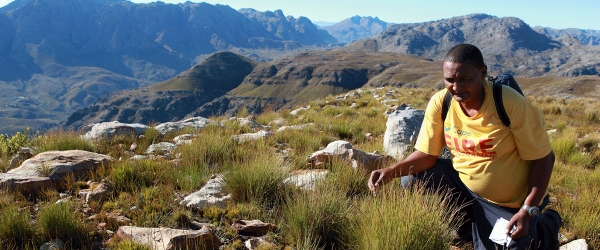
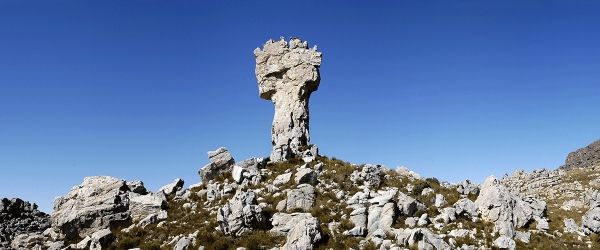
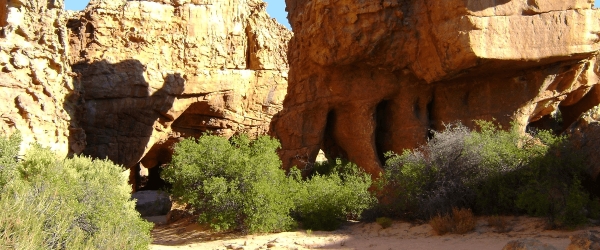
The Critically Endangered Clanwilliam cedar (Widdringtonia Cedarbergensis J.A. Marsh), found within the Cederberg Mountains of the Western Cape, South Africa, is confined to an area of approximately 250 km2 and at an altitude roughly between 800 and 1,500 meters above sea level, in rocky sandstone terrain. The number of Clanwilliam cedar trees…
The Cederberg Conservancy does not have the benefit of municipal waste removal services. This resulted in uncontrolled small scale waste dump sites located on individual properties in the Cederberg Conservancy. This practice could pose significant threats to the health and well-being of the environment, residents and visitors, and could detract…
The Cederberg Conservancy is a partner in this initiative run by CapeNature. Stewardship refers to the wise use, management and protection of that which has been entrusted to us. Within the context of conservation, stewardship means wisely using natural resources that we have been entrusted with on our property, protecting…
CapeNature launched its State of Biodiversity Programme to assess and monitor the state of biodiversity in the Western Cape in 1999. CapeNature has different monitoring and data collecting programmes that cover many different taxa with a particular focus on threatened species such as the Black Eagle breeding success and natural…
The Cederberg Conservancy hosts an annual Open Day to raise awareness among the farming community and to promote conservation initiatives. An Open Day has been hosted every year since 1998 and a variety of topics have been covered including: Water conservation, Snake awareness, Indigenous fish, Rock art conservation, Spiders, Fossils,…
The Cape Leopard Trust (CLT) is an environmental NGO and non-profit, founded in 2004 and based in the Western Cape, South Africa. They facilitate and promote the conservation of biological diversity, with a focus on the leopard as a flagship species.  The leopard is the last large predator and member…
The Initiative The Biodiversity & Wine Initiative is a partnership between the South African wine industry and the conservation sector. The goals are to minimise the further loss of threatened natural habitat, and to contribute to sustainable wine production, through the adoption of biodiversity guidelines by the South African wine…

Accommodation

Mount Ceder

3 and 4 star self-catering accommodation with option of meals at our restaurant.

more...

Intro Image (only use if it needs to be different to the main image)

Cederberg Park Kromrivier

Kromrivier, situated in the central Cederberg offers self-catering accommodation or DB&B; luxury campsites with individual ablution facilities and power points.

more...

Activities

Intro Image (only use if it needs to be different to the main image)

Overnight Hikes

The available huts on trails serve as shelters only and do not have beds. Hikers can sleep under the stars or in caves or carry a tent.

more...

Conservation projects

Intro Image (only use if it needs to be different to the main image)

Sustainable Ceder - Clanwilliam Cedar Restoration

The Cederberg Conservancy are the proud custodians of the Clanwilliam cedar tree (Widdringtonia Cedarbergensis).

more...

Intro Image (only use if it needs to be different to the main image)

Open Days & Awareness

The Cederberg Conservancy hosts an annual Open Day to raise awareness among the farming community and to promote conservation initiatives.

more...

Intro Image (only use if it needs to be different to the main image)

Cape Leopard Trust

The Cape Leopard Trust (CLT) was established with the primary objective to facilitate and promote research and conservation of the Cape’s predator diversity.

more...

Intro Image (only use if it needs to be different to the main image)

SOB Data Collections

CapeNature launched its State of Biodiversity Programme to assess and monitor the state of biodiversity in the Western Cape in 1999.

more...

About Cederberg Conservancy

  • The Cederberg Conservancy was constituted in 1997 as a voluntary agreement between landowners to manage the environment in a sustainable manner. It consolidates 22 properties in the central Cederberg as one of the core corridors of the Greater Cederberg Biodiversity Corridor and it is active through quarterly meetings and awareness days.

    Visitors to the area can engage in bird watching or easy hikes to the Stadsaal cave and Elephant rock art. For the more adventurous visitor the Conservancy offers Mountain bike trails or overnight hiking trials that vary from one to five nights, depending on your level of fitness and ability.